
Introduction
Access to uncontaminated water supplies is necessary for maintaining human health and supporting agricultural activities and industrial operations. Water safety assessments require proper methods to establish actual safe water status. Home test kits serve as the primary testing solution for most people whereas certified labs operate as the preferred testing centers for industries and municipalities. Accurate water quality testing requires a solution that combines low-tech techniques with professional testing services according to existing requirements.
Basic testing instruments developed by the testing industry and certified water quality testing services lead to different outcomes that businesses and people need to know. This blog compares both approaches to determine which option delivers reliable, consistent, and regulatory-compliant results.
Understanding Water Quality Testing
Water quality testing involves analyzing physical, chemical, and biological characteristics of water. Testing parameters include pH level and turbidity and hardness and total dissolved solids (TDS) and heavy metals and bacteria and chemical contaminants.
The goal of accurate water quality testing is to ensure that water meets safety standards for drinking, industrial use, irrigation, or environmental discharge. Testing methods produce results that differ in their testing depth and outcome reliability and testing precision.
Low-Tech Water Testing Methods
The home testing kits and simple digital meters represent the basic equipment which forms the foundation of low-tech testing methods. The equipment functions as accessible tools which anyone can operate without difficulty.
Advantages of Low-Tech Testing
The system provides fast results which users can access without difficulty. The system provides basic testing functions at no charge to users. The system lets users conduct their first tests of water samples for testing purposes. The kits enable users to test essential water quality parameters which include pH levels and chlorine concentrations and hardness values. The system enables homeowners to perform regular water quality assessments without complexity.
Limitations of Low-Tech Testing
The basic testing methods which users find easy to use present testing challenges which users must understand. The methods fail to identify trace substances and heavy metals and microbial pathogens with reliable accuracy. The methods used for water quality assessment in regulated environments and industrial settings require higher accuracy standards which the tests fail to meet.
Professional Water Quality Testing Services
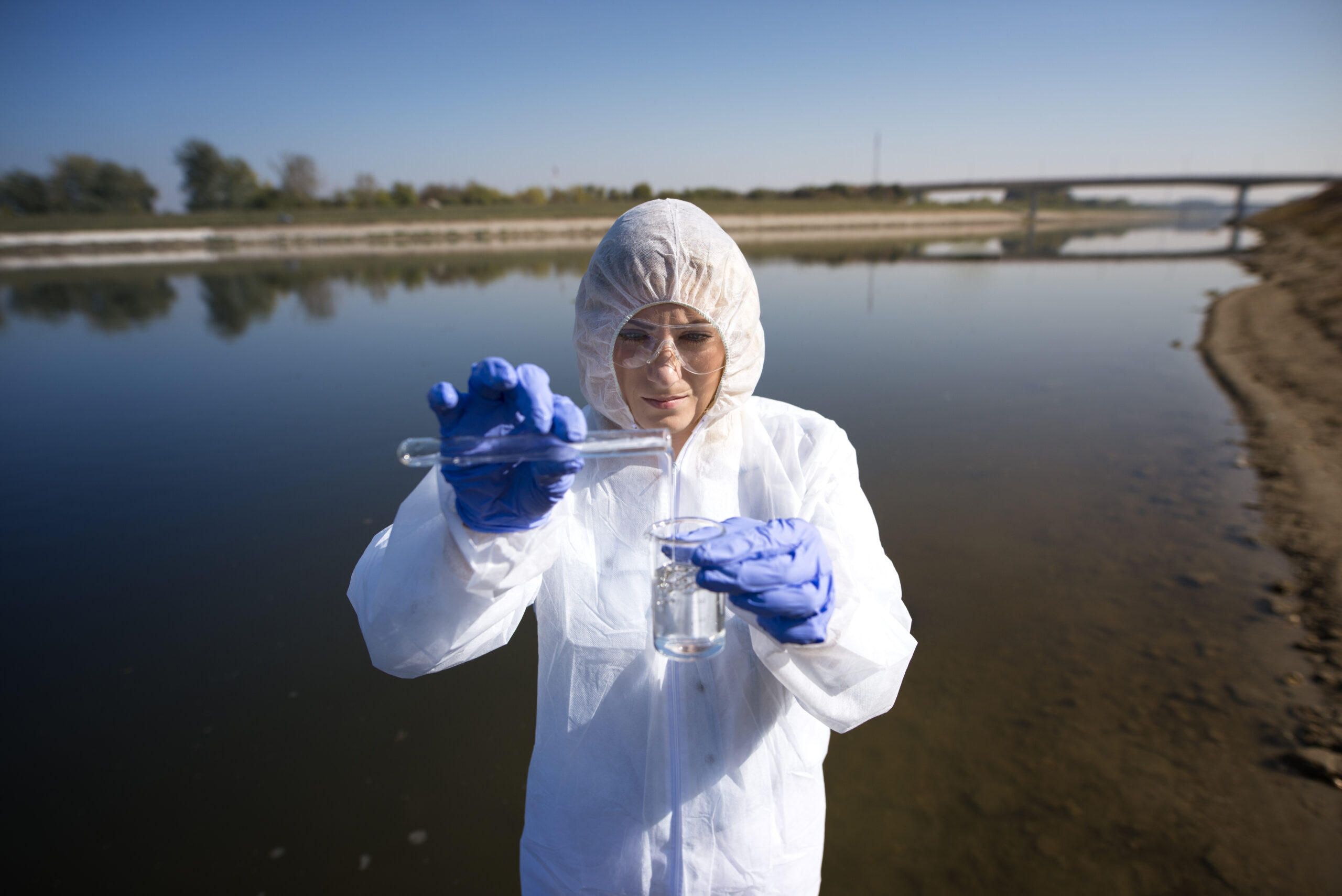
The certified laboratories provide professional water quality testing services which use advanced equipment and standardized methods to perform their testing procedures. The testing services examine all water quality parameters of the body of water which includes both chemical contaminants and microbiological elements and toxic substances.
Advantages of Professional Testing
1. High Accuracy and Reliability
The laboratories achieve precise results through their use of calibrated instruments and their implementation of validated procedures which support accurate water quality testing.
2. Comprehensive Analysis
Professional services detect contaminants that basic kits cannot, including lead, arsenic, pesticides, and harmful bacteria.
3. Regulatory Compliance
The environmental regulations require both industries and municipalities to follow their requirements. Certified water quality testing provides documented reports which organizations use during audits and inspections.
4. Expert Interpretation
The laboratory staff interprets test results and provides recommendations for required corrective actions.
Comparing Low-Tech and Professional Testing
People should assess both the intended usage and the potential risks before they choose between the two testing methods.
- Low-tech kits provide enough capability to monitor basic household activities.
- Professional water quality testing serves essential purposes for drinking water safety verification, industrial applications and environmental compliance testing.
Laboratory-based water quality testing provides superior testing accuracy because it uses advanced scientific methods.
The Importance of Accurate Water Quality Testing
Water testing results become dangerous when they contain incorrect data or missing information. Contaminated water sources can create health risks which damage equipment and result in regulatory violations.
Professional water quality testing helps:
- Protect public health
- Prevent industrial corrosion and scaling
- Ensure safe agricultural irrigation
- Meet environmental discharge standards
The investment in certified testing often prevents larger financial and health risks in the long term.
Conclusion
The testing methods that use simple technology provide benefits because they are easy to use and cost less. The testing methods which use simple technology can only measure a limited range of results. The system can function as a basic monitoring tool, but its actual capabilities exceed this capacity. The water quality testing needs of safety and compliance and reliability requirements need professional water quality testing services to guarantee testing accuracy.
Testing needs require users to select testing methods based on three factors which include application needs and risk assessment and regulatory compliance. The most reliable method to maintain water safety and quality for most situations is through professional laboratory testing.
FAQs
1. What is water quality testing?
Water quality testing analyzes water to detect physical, chemical, and biological contaminants to ensure safety and compliance.
2. Are home water test kits reliable?
Home kits are useful for basic checks but may not provide comprehensive or highly accurate results.
3. Why is accurate water quality testing important?
It protects public health, prevents equipment damage, and ensures compliance with safety regulations.
4. How often should water be tested?
Testing frequency depends on usage. Drinking water should be tested annually, while industrial systems may require more frequent testing.
5. When should I choose professional water quality testing?
Professional testing is recommended for drinking water verification, industrial compliance, environmental monitoring, and detecting complex contaminants.